
When Hands Speak: Building a
More Inclusive World Through Indian Sign Language About Indian Sign Language Language is more than a means of
communication. It is how people learn, express themselves, build relationships,
participate in society, and affirm who they are. For the Deaf community, Indian
Sign Language (ISL) is a language in its own right- one that carries meaning
through visual and gestural expression and is deeply connected with
communication, identity, and community. Sign languages are not
universal. Different countries and communities have developed their own sign
languages over time. ISL is the sign language used by the Deaf community in
India, and it has its own linguistic structure. It is therefore not simply a
collection of gestures or a visual version of spoken languages. And ISL is not a language that
needs to remain within the Deaf community alone, as well. Parents, teachers,
friends, colleagues, healthcare professionals, service providers and members of
the wider community can all learn it. When more people can communicate in ISL,
opportunities for interaction and participation become more accessible. The journey towards
institutionalising ISL in India has, therefore, been shaped significantly by
the advocacy of the Deaf community. The Government of India approved the
establishment of the Indian Sign Language Research and Training Centre (ISLRTC)
in 2011, and following sustained advocacy, ISLRTC was established as an
autonomous organisation under the Department of Empowerment of Persons with
Disabilities in September 2015. Its work includes promoting and developing ISL,
conducting research and developing training and learning resources. Over the years, this ecosystem
has expanded through resources such as the Indian Sign Language Dictionary,
interpreter and teacher training, and the development of educational material
in ISL. These efforts represent an
important recognition: language access is an essential part of meaningful
inclusion. Initiatives of Tata Steel Foundation
for the Deaf Community At the grassroots, inclusion
becomes meaningful when it translates into everyday opportunities. Through
Sabal, Tata Steel Foundation is working to create greater awareness of Indian
Sign Language and strengthen opportunities for participation for members of the
Deaf community. One important area of this work
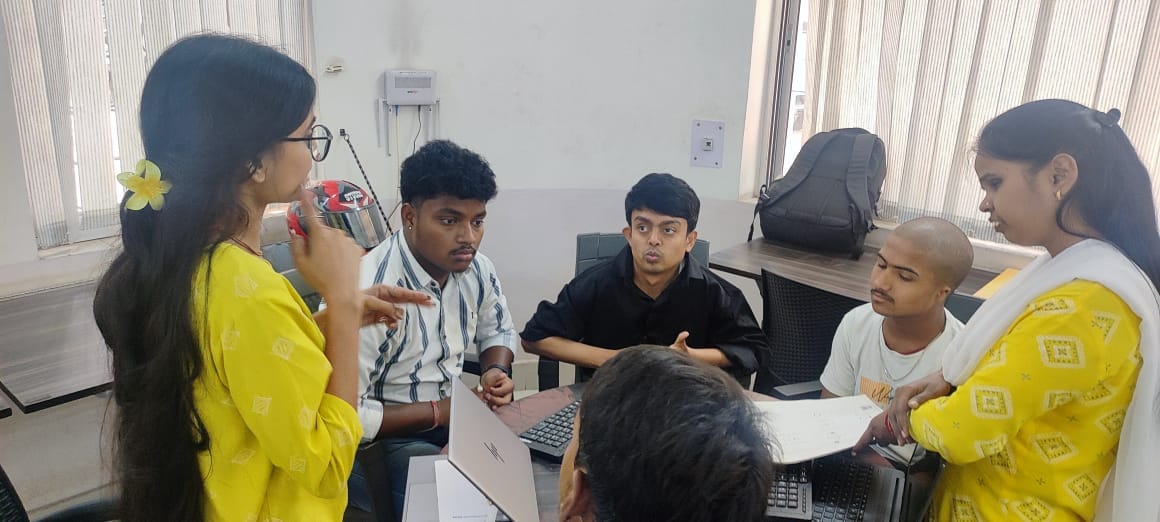
is ISL awareness. Sabal conducts awareness sessions for schools, colleges, companies,
and families, creating opportunities for people to understand Deaf culture and
communication and to learn basic signs. The objective is not merely to teach a
set of signs, but to encourage a more inclusive approach to communication. Sabal also facilitates basic ISL
training for the Deaf community, while creating avenues for development through
other interventions. Its athletic training programme for Deaf people connects
inclusion with sport, discipline, teamwork, and aspiration- creating space for
participants to explore their abilities and interests beyond conventional
expectations. Education remains another
important pathway. At Carmel Bal Vihar, Jamshedpur, 12 students from the Deaf
community of Noamundi are pursuing residential schooling from Classes VIII to
XII, bringing together education, a supportive environment, and opportunities
for holistic development. The work also reaches rural
communities. ISL awareness sessions in Joda, Noamundi and Danagadi seek to take
the conversation around accessible communication beyond institutional settings
and into communities. This is particularly significant because inclusion
becomes sustainable when awareness is built not only among persons with
disabilities, but also among the families, institutions and communities that
surround them. Together, these initiatives
reflect a larger approach: accessibility is not about creating a separate
world for persons with disabilities; it is about making the existing world more
accessible to everyone. International Day of Sign
Languages - 23rd September Every year, 23rd September is
observed as the International Day of Sign Languages. The United Nations
proclaimed the day in 2017, with the first observance taking place in 2018. The
date commemorates the establishment of the World Federation of the Deaf on 23
September 1951. In 2026, the International Week
of Deaf People, observed from 21 to 27 September, carries the theme “Declaring
Deaf People’s Human Rights.” The World Federation of the Deaf's 2026 messaging
places sign-language rights firmly within the larger framework of human rights,
inclusive education, accessibility, participation, and Deaf culture. For Sabal, the occasion is being
observed through a month-long celebration around Indian Sign Language, taking
the conversation beyond a single day. The focus is on creating greater
awareness, encouraging learning, and helping more people understand that
communication access is fundamental to participation. The celebration is therefore not
simply about learning to sign. What would our schools,
workplaces and communities look like if everyone could participate without
communication becoming a barrier? Sabal Sabal, Tata Steel Foundation's
disability inclusion programme, was established in Noamundi in 2017 with the
aim of creating opportunities for persons with disabilities through skilling,
awareness, employability, and community engagement. Over time, its work has expanded
into a broader ecosystem spanning rights-based inclusion, education, skilling,
livelihoods, sports, community engagement and platforms that create
aspirational visibility for persons with disabilities. The programme now works
across multiple blocks in Jharkhand and Odisha, with a focus on reaching rural
communities and strengthening access to rights and opportunities. At its heart, Sabal seeks to
shift the conversation from disability to possibility- from barriers to access,
from participation to leadership, and from inclusion as an idea to inclusion as
an everyday reality.
It is about asking a larger question:
When Hands Speak: Building a More Inclusive World Through Indian Sign Language