
Media Release: Development of Bioactive Coatings for Biomedical Implants
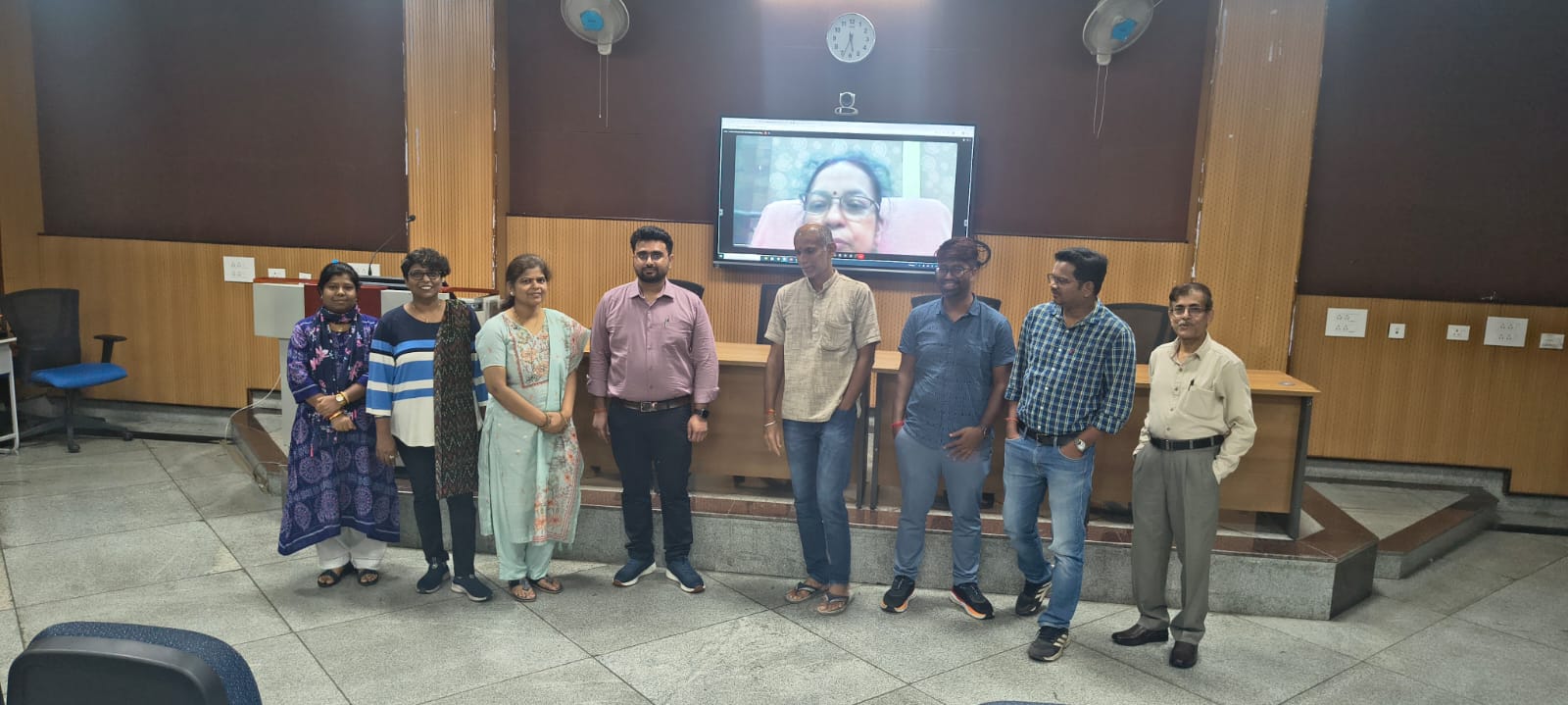
Jamshedpur, August 13, 2026: Kamal Bahadur Yadav, Research Scholar in the Department of Metallurgical and Materials Engineering, National Institute of Technology Jamshedpur (NIT Jamshedpur), successfully defended his PhD research work entitled “Development of Bio-active Coating on Bio-implant” under the guidance of Dr. Renu Kumari, Assistant Professor, Department of Metallurgical and Materials Engineering, NIT Jamshedpur.
The PhD defence was evaluated by Prof. Jyotsana Majumdar, Professor, Department of Metallurgical and Materials Engineering, who joined the defence online as the external examiner.
The defence was attended by members of the Departmental Research Committee and faculty members, including Dr. Chandrashekhar Sekhar Chaudhari, Head of the Department and Chairman of the SRC; Dr. Rina Sahu, Associate Professor, Department of Metallurgical and Materials Engineering; Dr. Binay Kumar, Assistant Professor; and Dr. Dulari Hansdah, Department of Mechanical Engineering, along with other faculty members and research scholars of the institute.
The research work focused on the development of advanced bioactive coatings for biomedical implants, particularly Ti-6Al-4V alloy, with the objective of improving implant performance, durability, surface properties, and biological compatibility. As part of the research, a functionally graded HA-Al₂O₃-TiO₂ coating was developed on Ti-6Al-4V alloy. Hydroxyapatite (HA), alumina (Al₂O₃), and titanium dioxide (TiO₂) were incorporated in graded compositions to improve the interfacial compatibility and functional performance of the coating.
The developed functionally graded coating is intended to address important challenges associated with conventional biomedical implants, including poor surface bioactivity, wear, corrosion, and inadequate long-term performance. The research demonstrated the potential of the developed coating system to enhance the service life and biological performance of metallic biomedical implants.
The research has potential clinical significance because improved and durable bioactive implant surfaces may contribute to better implant integration and longer service life. In the long term, such developments could help reduce implant failure and the need for frequent revision surgeries, thereby improving patient outcomes and reducing the burden associated with repeated surgical procedures.
The research work represents an effort toward the development of advanced surface-engineering solutions for biomedical applications and highlights the potential of functionally graded ceramic coatings for improving the performance and longevity of metallic implants.